
Cataract Evaluation in Alamosa, Colorado
If your vision feels cloudy, glare is getting worse, or glasses are no longer helping like they used to, cataracts may be the reason. At San Luis Valley Eye Care in Alamosa, we offer a thorough eye examination for cataracts to determine what is changing and when treatment may be needed. Our cataract evaluation and consultation is designed to help you understand your options and move forward at the right time.
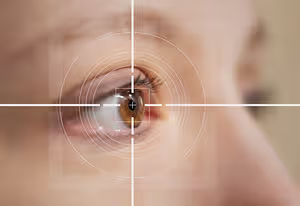

Is Your Vision Feeling Cloudy or Glare Is Getting Worse
If your vision feels blurry, hazy, or like there is a film over it, cataracts may be the reason.
Many patients in Alamosa notice difficulty with night driving, glare from headlights, or frequent prescription changes that no longer seem to help. Colors may appear dull, and everyday tasks like reading or recognizing faces may feel harder than they used to.
These changes often happen gradually, which makes them easy to overlook at first. A cataract test during a comprehensive eye examination can confirm whether cataracts are the cause. If something feels different, it is worth checking.

Cataracts Are Common and Treatable
Cataracts occur when the clear lens inside your eye becomes cloudy over time.
This clouding interferes with how light passes through the eye, leading to reduced clarity and increased glare. Cataracts typically develop slowly and are most commonly related to aging, although conditions such as diabetes and certain medications can increase the risk.
Cataracts can affect one or both eyes and tend to worsen over time if left untreated.
Common Symptoms of Cataracts
Cataracts can affect your vision in ways that often feel like normal aging.
You may notice:
- Blurry or cloudy vision
- Glare or halos around lights
- Increased sensitivity to light
- Difficulty seeing at night
- Frequent changes in glasses or contact lens prescription
- Colors appearing faded or yellowed
- Double vision in one eye
- Difficulty seeing in low-light conditions
If these symptoms are affecting your daily life, it is time for an evaluation.


What Happens During a Cataract Evaluation
Your cataract consultation involves a comprehensive eye examination designed to evaluate both your vision and overall eye health. This cataract surgery consultation helps us determine whether surgery is appropriate and when to act.
Your evaluation may include:
- Review of your medical history and symptoms
- Visual acuity testing to measure clarity
- Slit lamp examination to assess the structures of your eye
- Retinal examination to evaluate the back of the eye
- Refraction testing to determine prescription changes
- Tonometry to measure eye pressure
- Contrast and glare testing
These tests help determine how much cataracts are affecting your vision and guide the next steps in your care.
What To Do When Cataracts Start Affecting Daily Life
Cataracts do not always require immediate treatment.
In early stages, vision changes may be manageable with updated prescriptions or simple adjustments like improved lighting. As cataracts progress, they can begin to interfere with everyday activities such as:
- Driving safely at night
- Reading comfortably
- Recognizing faces clearly
The decision to move forward with treatment is based on how your vision is impacting your quality of life.

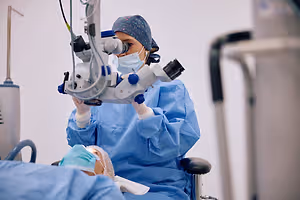
Cataract Surgery and Your Treatment Options
Cataract treatment depends on the severity of the condition. Your eye examination for cataracts helps us determine the right path forward.
In early stages, vision may improve with:
- Brighter lighting
- Anti-glare lenses
- Updated prescriptions
Our Role in Cataract Care in Alamosa
At San Luis Valley Eye Care, we guide you through the entire process. We:
- Diagnose and monitor cataracts
- Help determine when surgery is appropriate
- Coordinate care with trusted surgical partners
- Provide follow-up care after surgery to monitor healing
You are not sent off without guidance. We remain part of your care before and after surgery.
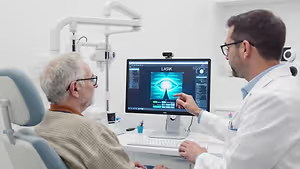

What to Expect After Cataract Surgery
Recovery from cataract surgery is typically quick. Most patients notice improved vision within a few days. During recovery:
- Eye drops are used to reduce inflammation and prevent infection
- Follow-up visits ensure proper healing
- A protective shield may be recommended temporarily
Ongoing care is important to maintain long-term vision health.
Ongoing Eye Care After Cataracts
Even after successful treatment, regular eye exams remain important.
Ongoing care allows us to:
- Monitor overall eye health
- Detect other conditions early
- Maintain clear and stable vision over time

Common Questions About Your Cataract Evaluation
No. Cataracts do not improve or go away without treatment. They typically progress slowly over time, which is why regular eye exams are important to monitor changes.
Cataracts often cause gradual changes, such as increased glare, trouble with night driving, or vision that no longer improves with glasses. An eye exam is the only way to confirm whether cataracts are the cause.
Yes, cataracts are very common as you get older. However, just because they are common does not mean they should be ignored, especially if they begin to affect your daily life.
In early stages, updating your glasses may improve your vision temporarily. Over time, as cataracts progress, glasses become less effective at improving clarity.
Most patients notice improved vision within a few days, with full healing occurring over several weeks. Follow-up care is important to ensure proper recovery.
A cataract evaluation is a comprehensive eye examination focused on assessing the health of your lens and determining whether cataracts are affecting your vision. It includes visual acuity testing, slit lamp exam, refraction testing, and glare and contrast assessments. The goal is to understand how cataracts are impacting your daily life and guide your next steps.
During a cataract evaluation, your eye doctor will review your symptoms and medical history, test your visual acuity, examine the lens and structures of your eye with a slit lamp, measure your eye pressure, and assess how glare and contrast are affecting your sight. The full evaluation typically takes less than an hour.
A cataract evaluation typically takes between 45 minutes and one hour. If your eyes are dilated as part of the exam, you should plan for additional time for your vision to return to normal before driving.
Yes, dilation is typically part of a cataract evaluation. Eye drops are used to widen your pupils so your doctor can get a clear view of your lens and the back of your eye. Your vision may be blurry and sensitive to light for a few hours afterward, so plan to have someone drive you or bring sunglasses.
Because your eyes are likely to be dilated during a cataract evaluation, you may not be able to drive safely immediately after the appointment. Your vision may be blurry and light-sensitive for a few hours. We recommend arranging a ride or waiting until your vision returns to normal before driving.
Yes, cataract surgery is typically performed while you are awake. You will receive local anesthesia (eye drops or an injection) to numb the eye, and a mild sedative may be given to help you relax. You will not feel pain, and the procedure usually takes less than 30 minutes per eye.
Most patients are not put fully to sleep for cataract surgery. General anesthesia is rarely needed. Instead, local anesthesia numbs the eye and a light sedative helps you stay calm and comfortable. You remain conscious throughout the procedure, which typically takes under 30 minutes.
Take the Next Step at the Right Time
If your vision has become cloudy, dim, or harder to rely on, now is the time to take the next step.
You are not committing to surgery. You are getting answers.
Call (719) 992-2121 or request an appointment to schedule your cataract evaluation in Alamosa, CO. We will help you understand what is happening and guide you toward the right decision at the right time.