
Glaucoma Testing in Alamosa, CO
Glaucoma can develop without symptoms, meaning you may not notice a problem until vision loss has already begun. At San Luis Valley Eye Care in Alamosa, we use advanced testing to detect glaucoma early and monitor changes before they affect your sight. A simple exam can help you understand your risk and protect your vision over time.


You Can Have Glaucoma and Not Know It
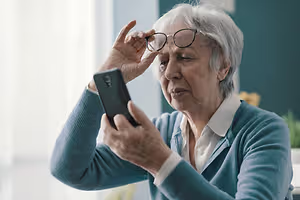
Glaucoma is often called the “silent thief of sight” because it can develop without noticeable symptoms.
Most patients feel fine in the early stages. There is no pain, and vision may seem normal. Over time, however, glaucoma can slowly affect side vision and lead to permanent vision loss if it is not detected early.
That is why routine eye exams are critical, even when nothing feels wrong.
What Is Glaucoma?
Glaucoma is a group of eye conditions that damage the optic nerve, which is responsible for sending visual information from your eye to your brain.
This damage is often related to increased pressure inside the eye, although glaucoma can also occur with normal pressure levels.
Because the condition progresses gradually, many people do not realize they have it until vision changes occur.
Different Types of Glaucoma
Glaucoma can develop in several forms, including:
- Open-Angle Glaucoma – The most common type, developing slowly over time without early symptoms.
- Angle-Closure Glaucoma – A less common but more urgent form that can cause sudden symptoms such as eye pain, blurred vision, and nausea.
- Normal-Tension Glaucoma – Optic nerve damage occurs even without high eye pressure.
- Congenital Glaucoma – A rare condition present at birth.
- Secondary Glaucoma – Caused by other conditions such as injury, inflammation, or certain medications.
Each type requires careful evaluation and monitoring.


Symptoms of Glaucoma
In early stages, glaucoma usually does not cause noticeable symptoms.
As the condition progresses, you may experience:
- Gradual loss of peripheral (side) vision
- Difficulty seeing in low-light conditions
- Tunnel vision in advanced stages
In more urgent cases, symptoms may include:
- Eye pain
- Sudden blurred vision
- Halos around lights
- Redness of the eye
The goal is to detect glaucoma before these symptoms appear.
How We Diagnose Glaucoma
A comprehensive eye exam is the only way to detect glaucoma early.
Your evaluation may include:
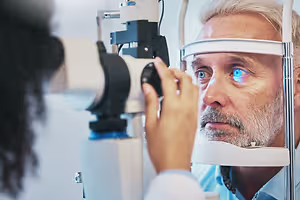
- Measurement of eye pressure (tonometry)
- Visual field testing to assess peripheral vision
- Optic nerve evaluation
- Gonioscopy to examine the drainage angle of the eye
- Optical Coherence Tomography (OCT) to analyze nerve structure
- Pachymetry to measure corneal thickness
- Retinal imaging to monitor changes over time
These tests allow us to identify glaucoma early and track its progression accurately.

Why Early Detection Matters
Glaucoma cannot be reversed, but early detection can slow or prevent further vision loss.
Regular testing allows us to:
- Detect changes before vision is affected
- Monitor progression over time
- Begin treatment at the right stage
The earlier glaucoma is identified, the more effectively it can be managed.
Our Treatment Options for Glaucoma
Treatment focuses on lowering eye pressure and protecting the optic nerve.
Depending on your condition, treatment may include:
Prescription eye drops or oral medications to reduce eye pressure.
Procedures such as selective laser trabeculoplasty (SLT) to improve fluid drainage.
In more advanced cases, procedures such as trabeculectomy or minimally invasive glaucoma surgery (MIGS) may be recommended.
Regular exams to track pressure levels and optic nerve health over time.

Managing Glaucoma Over Time
Glaucoma is a long-term condition that requires consistent care.
In addition to treatment, management may include:
- Regular eye exams
- Monitoring eye pressure
- Following prescribed treatment plans
- Supporting overall health through lifestyle habits
With proper care, many patients maintain stable vision and avoid significant vision loss.
What to Expect During Your Glaucoma Testing Appointment
Knowing what to expect can make your appointment more comfortable. Here is a simple overview of what a glaucoma evaluation at San Luis Valley Eye Care in Alamosa typically looks like:
- Arrival and intake: We will review your health history, any family history of glaucoma, and your current medications.
- Eye pressure measurement (tonometry): A quick, painless test that measures the fluid pressure inside your eye. This is one of the key indicators we monitor.
- Visual field test: You will look into a screen and respond to small flashes of light. This checks whether your peripheral vision has been affected.
- Optic nerve evaluation: Using a slit lamp or imaging device, we examine the optic nerve at the back of your eye for signs of damage.
- OCT imaging: Advanced imaging provides a detailed scan of your optic nerve structure so we can track changes over time.
- Dilation (if needed): Some patients receive dilating eye drops for a more thorough view. If dilated, plan to have someone drive you home, as your vision may be temporarily blurred and light-sensitive for a few hours.
Most appointments take between 30 and 60 minutes. Our team will walk you through each step and answer any questions you have along the way.
Answers About Glaucoma and Your Vision
Yes. Most people with glaucoma do not notice any symptoms in the early stages. Vision often seems normal until damage has already begun, which is why regular eye exams are important.
Not always. Some people have higher eye pressure without developing glaucoma, while others can have glaucoma with normal pressure. This is why testing looks at more than just pressure alone.
Glaucoma usually develops slowly over time, but the rate can vary from person to person. With regular monitoring, we can track changes and adjust care to help slow progression.
No. Glaucoma cannot be reversed once damage has occurred. However, it can often be managed effectively when detected early, which helps protect your remaining vision.
Yes. Many patients with glaucoma feel completely normal in the early stages. Testing is the only way to detect changes before they affect your vision.
A glaucoma evaluation typically includes several painless tests. These may include tonometry to measure eye pressure, visual field testing to check your peripheral vision, an optic nerve evaluation, and optical coherence tomography (OCT) to analyze the structure of the nerve in detail. Retinal imaging and pachymetry (corneal thickness measurement) may also be performed. Together, these tests give us a complete picture of your eye health.
A comprehensive glaucoma evaluation typically takes between 30 and 60 minutes, depending on which tests are performed. Some tests, such as visual field testing, take a little more time. We will let you know in advance what to expect during your appointment.
It depends on whether dilating drops are used during your exam. If your eyes are dilated, your vision may be temporarily blurred and sensitive to light for a few hours afterward, and you should plan to have someone drive you home. If no dilation is needed, you should be able to drive normally after your appointment. We recommend asking us in advance so you can plan accordingly.
Most glaucoma tests are quick and painless. You may sit at a slit lamp while we examine your optic nerve, look into a device that measures your eye pressure, or follow a series of light prompts during visual field testing. Some patients receive dilating eye drops to allow a better view inside the eye. The process is straightforward, and our team will explain each step as we go.
Schedule Your Glaucoma Evaluation
If you are unsure whether you have been checked for glaucoma recently, this is a good time to find out.
You are not committing to treatment. You are making sure your eyes are healthy.
Call (719) 992-2121 or request an appointment to schedule your glaucoma testing in Alamosa. We will take a careful look and help you understand what comes next.