
Neuro-Optometry in Alamosa, Colorado
If you see double, lose your place when reading, or feel like your eyes are not working together even though your prescription is correct, you may be experiencing binocular vision dysfunction (BVD), a condition where the eyes struggle to coordinate properly.
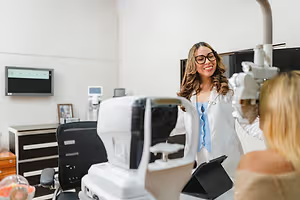

If You See Double or Reading Feels Harder Than It Should
If this sounds familiar, you are not imagining it, and it is worth a closer look.

When Everything Looks “Normal” but Something Still Feels Wrong
It is common for patients to be told their eyes look healthy, yet their symptoms continue.
This can be frustrating. You know something is not right, but it is difficult to explain, and standard exams may not uncover the cause.
These types of eye problems are often related to how your eyes and brain work together, not just how clearly you see.
This Is a Different Kind of Vision Problem
Most eye exams focus on how well you can see letters on a chart.
Neuro-optometry looks at how your eyes function as a team and how your brain processes visual information. When that connection is not working properly, it can lead to symptoms that do not improve with glasses alone.
This is why the problem may have been missed before.

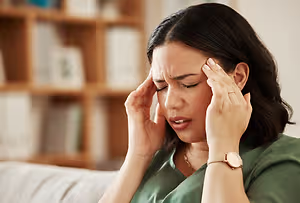
Common Symptoms That Patients Experience
Patients dealing with neuro-visual issues often notice:
- Double or overlapping vision
- Difficulty focusing, especially when reading
- Eye strain or fatigue that builds throughout the day
- Trouble keeping their place when reading
- A sense that their vision is inconsistent or unreliable
These symptoms can make everyday tasks feel more difficult than they should.
A Closer Look at What Is Causing the Problem
At San Luis Valley Eye Care, we take a more detailed approach when something does not add up.
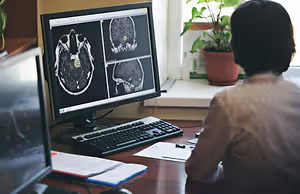
We evaluate how your eyes align, how they coordinate, and how your visual system responds during different tasks. We also use advanced diagnostic tools to identify underlying issues that may not be apparent on a basic exam.
The goal is to finally understand what is causing your symptoms.
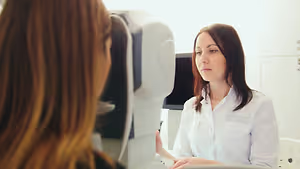
Treatment That Matches Your Specific Needs
Once we identify the issue, we create a plan based on what your eyes need.
This may include customized prescriptions, prism correction, or ongoing monitoring to improve how your eyes work together and reduce the symptoms you are experiencing.
Every case is different, which is why your care is tailored to you.
Answers About Vision That Feels "Off"
Binocular vision dysfunction (BVD) occurs when the eyes struggle to work together as a coordinated team. Even if each eye sees clearly on its own, misalignment in how they function together can create symptoms like double vision, eye strain, headaches, and difficulty reading. It is a condition that standard eye exams often miss.
Yes. Once we identify the underlying issue, treatment options may include customized prescriptions, prism lenses to correct alignment, or ongoing monitoring. The right plan depends on your specific situation. Many patients see significant improvement in their symptoms with the appropriate care.
BVD can result from a variety of factors including head injuries or traumatic brain injury (TBI), neurological conditions, uncorrected refractive errors, or simply the way your visual system developed. In some cases it appears gradually over time, making it easy to overlook until symptoms become more pronounced.
BVD is diagnosed through a neuro-optometry evaluation that goes beyond a standard vision test. We assess how your eyes coordinate, align, and process visual information together. This type of detailed evaluation is what allows us to identify issues that a routine exam would not catch.
Clear eyesight and functional binocular vision are two different things. You can have 20/20 clarity in each eye and still experience discomfort, instability, or difficulty because of how the eyes work together. When coordination or processing is off, vision may feel uncomfortable or unreliable even if individual letters look sharp.
Schedule Your Neuro-Optometry Evaluation
If your vision feels inconsistent, difficult to rely on, or has not improved with glasses, it is worth taking a closer look.
Especially if you have already tried other solutions and are still dealing with the same issues.
Call (719) 992-2121 or request an appointment to schedule your neuro-optometry evaluation in Alamosa. We will help you understand what is happening and what can be done to improve it.