
Macular Degeneration Diagnosis & Care in Alamosa, Colorado
If reading, recognizing faces, or seeing fine details has become more difficult, it may be more than normal aging. Macular degeneration gradually affects central vision, often before you realize how much things have changed. At San Luis Valley Eye Care, we evaluate your eyes carefully to detect early changes and help you protect your vision moving forward.


If Reading or Seeing Details Has Become More Difficult
If the center of your vision looks blurry, straight lines appear wavy, or reading has become harder even with your glasses, it may be more than normal aging.
Many patients notice they need more light, struggle to recognize faces, or feel like their vision is not as sharp as it used to be. These changes often happen gradually, which makes them easy to overlook.
If something feels different, it is worth taking a closer look.
What Is Macular Degeneration?
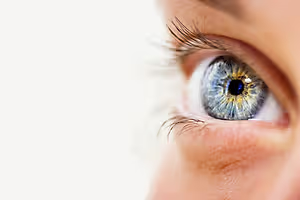
Macular degeneration is a condition that affects the macula, the central part of the retina responsible for detailed vision.
This is the area you rely on for reading, driving, and recognizing faces. When the macula becomes damaged, central vision becomes blurred or distorted, while side vision typically remains intact.
Age-related macular degeneration (AMD) is the most common form and becomes more likely as you get older.
Types of Macular Degeneration
Macular degeneration can develop in different forms:
Dry Macular Degeneration
This is the most common type and develops gradually. It occurs when the macula thins over time, often due to the buildup of small deposits called drusen.
Wet Macular Degeneration
This is less common but more advanced. It occurs when abnormal blood vessels grow under the retina and leak fluid or blood, leading to faster vision changes.
Understanding the type helps determine how your eye condition is monitored and managed.


Common Symptoms of Macular Degeneration
Macular degeneration often starts with subtle changes.
You may notice:
- Blurry or fuzzy central vision
- Difficulty reading or seeing fine details
- Straight lines appearing wavy or distorted
- Dark or empty spots in central vision
- Increased need for brighter light
- Difficulty recognizing faces
These symptoms can progress over time, especially without monitoring.
Why Macular Degeneration Is Often Missed Early
One of the biggest challenges with macular degeneration is that changes happen slowly.
Many patients adjust without realizing it. You may move things closer, use more light, or rely on one eye more than the other. Because these changes feel manageable at first, they are often mistaken for normal aging.
An eye exam allows us to determine whether these changes are expected or something that needs to be monitored.


Risk Factors for Macular Degeneration
Several factors can increase your risk, including:
- Age (especially over 60)
- Family history
- Smoking
- High blood pressure
- Cardiovascular disease
- Poor diet or lack of key nutrients
- Prolonged exposure to sunlight
Understanding your risk helps guide early monitoring and prevention.
How We Diagnose Macular Degeneration
A comprehensive eye exam allows us to detect early signs of macular degeneration.
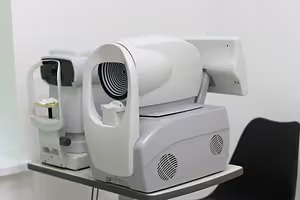
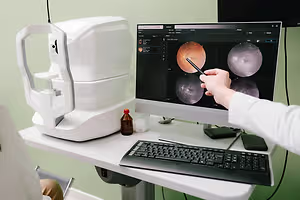
We use advanced diagnostic technology, including:
- Optical Coherence Tomography (OCT)
- Retinal imaging
- Detailed macular evaluation
These tools allow us to identify structural changes and monitor progression over time.
Treatment Options for Macular Degeneration
Treatment depends on the type and stage of the condition.
For Dry Macular Degeneration
- Monitoring progression
- Nutritional support and lifestyle recommendations
- Regular eye exams to track changes
For Wet Macular Degeneration
- Injection therapy to reduce abnormal blood vessel growth
- Laser treatments in some cases
- Ongoing monitoring to manage progression
While macular degeneration cannot be reversed, early detection and proper management can help preserve vision.
Answers About Changes in Your Central Vision
This type of vision change often points to an issue affecting the central part of the retina. Your side vision may stay clear while the center becomes less sharp, which is why reading or recognizing faces becomes more difficult.
Distorted or wavy lines can be a sign that the central retina is not functioning normally. This can happen gradually, which is why many people notice it only after it becomes more pronounced.
Needing more light is a common early sign that your central vision is not as strong as it once was. You may not notice a major vision change at first, but tasks like reading can become more effortful.
When vision changes are related to the retina rather than your prescription, updating glasses may not fully improve clarity. This is often why people feel like their vision is still “off” even after getting new lenses.
Yes. It is common for one eye to be affected before the other. Because the stronger eye can compensate, many people do not notice the change right away.
Yes, family history is one of the most significant risk factors for macular degeneration. If a parent or sibling has been diagnosed with AMD, your risk is higher. This makes regular eye exams especially important; early detection allows for closer monitoring before symptoms appear.
Macular degeneration cannot be fully reversed, but progression can often be slowed or managed with the right care. For dry AMD, lifestyle changes and nutritional support can help. For wet AMD, injection therapy can reduce abnormal blood vessel growth and preserve remaining vision. Early detection is the most powerful tool available.
The AREDS2 formula (a specific combination of vitamins C and E, lutein, zeaxanthin, zinc, and copper) has been shown in clinical studies to slow progression in intermediate to advanced dry AMD. We can discuss whether nutritional supplementation is appropriate for your situation during your exam.
Progression varies depending on the type. Dry AMD typically advances slowly over years, and many people retain functional vision for a long time. Wet AMD can progress much faster (sometimes over weeks or months), which is why prompt evaluation of new symptoms is important. Regular monitoring helps us track any changes early.
Both conditions can cause vision loss, but they affect different parts of the eye. Macular degeneration affects the macula (the central part of the retina), causing loss of central vision. Glaucoma affects the optic nerve and typically causes peripheral (side) vision loss first. Both are serious conditions that benefit from early detection and regular monitoring.
People with macular degeneration often describe a blurry or dark spot in the center of their vision, while side vision remains relatively clear. Straight lines may appear wavy or distorted, colors may seem less vivid, and reading or recognizing faces can become increasingly difficult. The Amsler grid is a simple at-home tool that can help you track these changes between exams.
Take the Next Step While Changes Are Still Small
If your vision isn't as clear as it used to be, even in small ways, it's worth taking a closer look. Catching changes early is the best way to protect your sight.