
When Eye Changes May Be Linked to Your Thyroid
If your eyes feel tight, dry, or look different from how they used to, it may be more than just a temporary issue. Thyroid eye disease can cause subtle changes that affect both comfort and appearance, often before you fully understand what is happening. At San Luis Valley Eye Care, we help connect these symptoms to their cause and guide you toward clear answers and next steps.


If Your Eyes Feel Tight, Dry, or Look Different
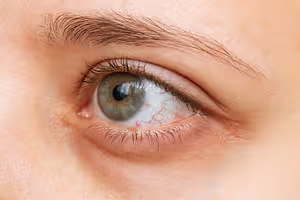
If your eyes feel tight, irritated, or under pressure, or you have noticed they look more open or prominent than before, you are not imagining it.
Many patients describe a feeling that something is “off.” Their eyes may look different in the mirror, feel uncomfortable throughout the day, or seem harder to focus. These changes can be subtle at first, but they are real.
If you have a thyroid condition, these symptoms may be connected.

These Changes Are More Common Than You Think
Thyroid eye disease is often linked to conditions like Graves’ disease and can affect both how your eyes feel and how they look.
Because the changes develop gradually, it is easy to question whether they are serious or even related. Many patients are unsure if what they are experiencing is normal.
It is worth checking, especially when symptoms continue or slowly worsen over time.
How Thyroid Conditions Affect the Eyes
Thyroid eye disease can cause inflammation and changes in the tissues around the eyes.
This may lead to:
- A feeling of pressure or fullness
- Dryness, redness, or irritation
- Eyes appearing more prominent
- Double vision or difficulty focusing
These symptoms can vary, but they often come on gradually and may not follow a clear pattern.

How We Evaluate Thyroid Eye Disease
At San Luis Valley Eye Care, we take a detailed look at how your eyes are functioning and how they may be affected by your thyroid condition.
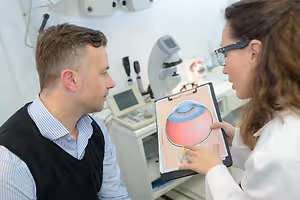
We examine the structures around your eyes, evaluate your vision, and use advanced imaging to detect changes that may not be obvious during a basic eye exam.
This allows us to determine whether your symptoms are related to thyroid eye disease and how they should be monitored.
Coordinating Care with Your Overall Health
Because thyroid eye disease is connected to your general health, your care may involve coordination with your primary doctor or endocrinologist.
We help connect those pieces so your eye health is managed alongside your thyroid condition.
You will understand what is happening and how everything fits together.
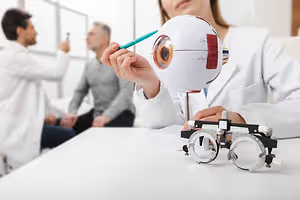
Monitoring and Managing Over Time
Thyroid eye disease is often managed over time rather than treated all at once.
Our goal is to track changes, manage symptoms, and support both comfort and vision as your condition evolves. With consistent care, many patients are able to maintain stability and avoid more significant complications.
Understanding the Stages of Thyroid Eye Disease
Thyroid eye disease typically moves through two distinct phases. Understanding where you are in this progression helps guide the right approach to monitoring and care.
Active Phase
During the active phase, inflammation in the tissues around the eyes is ongoing. Symptoms may be new or worsening: you might notice increasing redness, swelling, a feeling of pressure, or changes in how prominent your eyes appear.
This phase can last anywhere from six months to two years. Because the condition is still changing, close monitoring is especially important during this period. Catching and tracking changes early helps protect your vision and overall comfort.
Inactive Phase
Once the inflammation settles, thyroid eye disease enters an inactive phase. Symptoms stabilize and are no longer actively worsening. However, some changes (such as altered eye position or appearance) may remain even after inflammation resolves.
In the inactive phase, ongoing check-ins help ensure stability is maintained. For some patients, additional steps may be considered at this stage to address any lasting changes that affect comfort or function.
Answers About Eye Changes and Thyroid Conditions
The earliest signs are often subtle: a feeling of dryness or grittiness in the eyes, mild redness, or a slight change in how the eyes look, such as appearing more open or wide. Some patients first notice light sensitivity or a sense of pressure behind the eyes. Because these symptoms develop gradually, they can be easy to overlook or attribute to something else. If you have a known thyroid condition, these early changes are worth mentioning to your eye doctor promptly.
Changes in how your eyes look can happen gradually, even if they feel sudden. This may be related to changes in the tissues around the eyes, especially in people with thyroid conditions. It is not uncommon, and it is worth having evaluated.
Yes. Thyroid-related conditions can affect the muscles and tissues around the eyes, which may create a feeling of pressure, tightness, or fullness. This can come and go or slowly increase over time.
Eye drops can help temporarily, but they do not address the underlying cause when symptoms are related to thyroid changes. This is why discomfort may continue even when using over-the-counter solutions.
Yes. It is common for one eye to appear more affected than the other, especially early on. This difference can make changes more noticeable and concerning.
In some cases, symptoms may stabilize, but they do not always go away without proper evaluation and monitoring. Understanding the cause is important in determining what to expect over time.
Thyroid eye disease cannot always be fully reversed, but many patients see significant improvement, especially with early detection and proper management. The active phase, during which inflammation drives most symptoms, can often be managed to reduce its impact and duration. Once the disease enters the inactive phase, some changes may stabilize on their own. With consistent care and monitoring, many patients are able to maintain their vision and quality of life. The goal is to protect eye health, manage symptoms, and support the best possible outcome over time.
The active phase of thyroid eye disease typically lasts between six months and two years, though this varies from person to person. After the active phase, the disease moves into an inactive phase where symptoms stabilize. Some patients experience mild symptoms throughout, while others may notice more significant changes. Regular monitoring during and after the active phase helps ensure that any changes are caught early and managed appropriately.
Take the Next Step If Something Feels Different
If your eyes feel uncomfortable, look different, or you have a thyroid condition and are noticing changes, it's worth finding out why. Getting answers early can make a real difference.