Advanced Testing for Earlier Eye Disease Detection
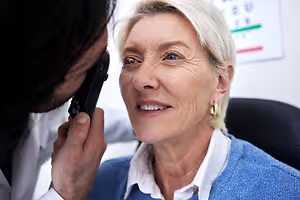
Some eye diseases can begin changing your eyes long before you notice a difference in your vision. That matters when conditions such as glaucoma and age-related macular degeneration can progress quietly in their early stages.
At San Luis Valley Eye Care, advanced testing during our comprehensive eye exams helps us look at eye health from more than one angle. Optomap retinal imaging shows a broad view of the retina, while RETeval electroretinography, or ERG, measures how retinal cells respond to light.
What RETeval & Optomap Tell Your Eye Doctor
A retinal image shows what your eye tissue looks like. An ERG can provide information about how retinal cells are working. Together, they provide two different pieces of the eye health picture.
A Wider View of the Retina
Optomap is an ultra-widefield retinal imaging system. The technology used at San Luis Valley Eye Care can capture up to 200 degrees of the retina in one image. This gives your eye doctor a broad view of the back of the eye, including areas near the retinal edges that can be hard to see with traditional imaging.
The scan is quick and comfortable. It may also provide useful retinal images without dilation during some visits. Your eye doctor may still recommend dilation when a closer examination is needed.
Optomap images can help your eye doctor detect and document changes linked to conditions such as macular degeneration, diabetic retinopathy, retinal tears, and other retinal problems. They can also provide a baseline for comparisons at future appointments.
Measuring Retinal Function
RETeval performs electroretinography, commonly called an ERG eye test. During ERG testing, light stimulates the retina while the device records its electrical response. The results provide objective information about retinal function.
RETeval uses skin electrodes rather than a corneal electrode for supported testing protocols. Depending on the testing protocol and the patient's needs, the technology may support evaluation or monitoring for glaucoma, diabetic retinopathy, macular degeneration, and certain inherited retinal conditions.
Several Tests Build a Clearer Picture
No single eye test answers every question. Your eye doctor may combine information from RETeval and Optomap with tests such as OCT imaging, eye pressure measurements, visual field testing, dilation, and a direct examination of the eye.
At a glance, these tests can provide different types of information:
- OCT: Detailed cross-sectional images of retinal and optic nerve tissue
- Visual field testing: Information about central and peripheral vision
- Eye pressure testing: One part of a glaucoma risk and monitoring assessment
Your advanced tests depend on your symptoms, health history, age, risk factors, and initial exam findings.
Advanced Eye Testing in Alamosa, CO
The San Luis Valley is a high-altitude, largely rural region, and some patients travel considerable distances into town for medical care. Thorough testing helps your eye doctor gather useful information during your visit and decide what follow-up makes sense.
At San Luis Valley Eye Care, technology supports a medical-first approach centered on careful testing, clear explanations, and long-term eye health. Your eye doctor may recommend an advanced test because of something found during an exam, an existing condition, your family or medical history, or a change that needs closer attention.
Protect Your Vision With a Closer Look
Technology works best when it gives your eye doctor useful information to support better-informed eye care.
If you're due for a visit, have risk factors for eye disease, or need ongoing monitoring, book an eye exam at San Luis Valley Eye Care so we can help you understand your vision needs.
Frequently Asked Questions
Does Retinal Function Testing Hurt?
- RETeval uses noninvasive skin electrodes for supported protocols rather than placing an electrode directly on the cornea. Patients look at controlled light stimuli while the device records retinal responses.
Do I Need Advanced Testing at Every Eye Exam?
- Your eye doctor decides which tests are appropriate based on your eye health, medical history, age, symptoms, risk factors, and previous findings. Some patients benefit from additional testing or repeat measurements to track changes over time.
Can Advanced Testing Predict Future Vision Loss?
- These tests provide valuable clinical information, yet they cannot predict exactly what will happen to an individual patient's vision. Your eye doctor considers test results alongside your medical history, exam findings, risk factors, and changes over time.